How hand pollination works, and why the cross is recorded
Daniel Pretorius · 4 min read · 26 August 2026
Hand pollination is how a breeder decides which plant fathers which, instead of leaving it to insects. It is also where a plant's provenance begins, because the cross is chosen, made and written down at the flower. The parts and terms below follow the Clivia Society terminology.
The parts that matter
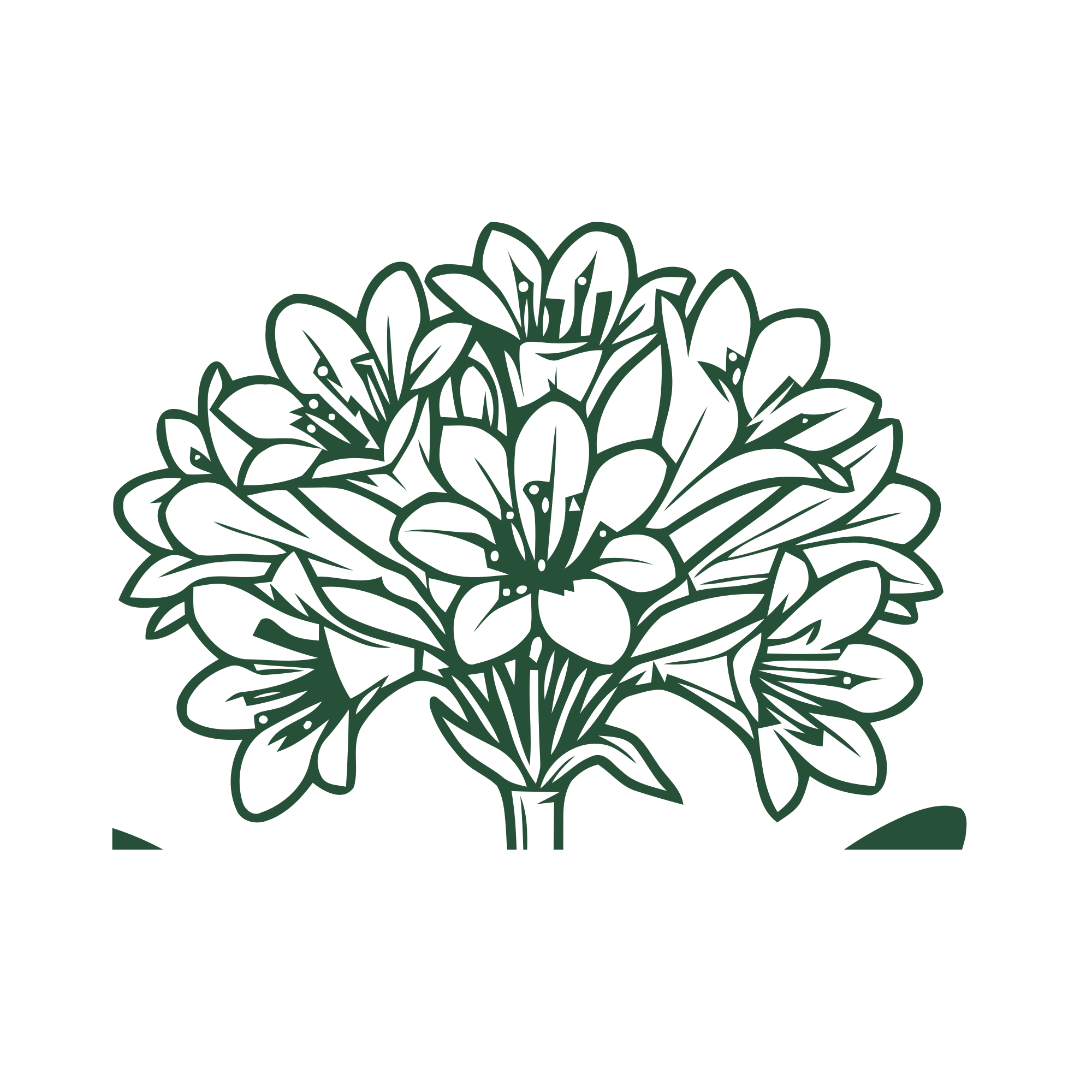
A Clivia flower head, the umbel, sits on a leafless stalk called the scape, and each single flower is held on its own short stalk, the pedicel. Six showy tepals, three outer and three inner, surround the working parts. The male parts are the six stamens, each a thread-like filament tipped with a pollen-bearing anther. The female part, the pistil, runs down the centre: a three-armed stigma at the top catches pollen, the style is the stalk beneath it, and at the base sits the ovary. Inside, the ovary has three chambers holding roughly eight to ten ovules each, and every ovule that is fertilised can become a seed.
Emasculation: preventing a self
To be certain of the father, the grower first removes the mother's own pollen. This is emasculation: lifting out the six anthers from a flower before they open and shed, usually a day or so before the flower is fully receptive. With its own anthers gone, the flower cannot pollinate itself, and any seed it sets must come from the pollen the breeder chooses. Without this step a recorded cross cannot be trusted, because the plant may quietly have selfed.
Timing and receptivity
Pollen is ready when the anther looks dry and fluffy and dusts off onto a fingertip or a small brush. The stigma is ready a little after the flower opens: its three arms separate and the tips turn glossy and sticky, the sign that they will hold pollen. Mid-morning on a dry day is the usual window, and a flower often stays receptive for two or three days. If a stigma stays dry and unwilling, some growers trim the tip of a stigma arm to expose the receptive tissue inside the style. Fresh, ripe pollen onto a glistening stigma is what gives the best seed set.
Transferring the pollen
The transfer itself is simple. The breeder touches ripe pollen from the chosen father onto the three sticky tips of the mother's stigma, enough to coat them. A named cross uses one father only, and the flower can be dabbed again the next day to be sure. The scape is often labelled at this point, a small tag tied at the pedicel carrying the cross, so the record is fixed to the flower that will carry the berry.
Storing pollen across the seasons
Not every intended pair flowers at the same time. The upright miniata flowers mainly in spring, while gardenii and robusta flower in autumn and winter, so a cross between them is impossible with fresh pollen alone. The answer is stored pollen. Anthers are collected when ripe, dried, and kept in small labelled containers in the refrigerator or freezer, where the pollen stays viable for weeks and, frozen, considerably longer. A breeder can then carry a spring pollen forward to an autumn mother, or hold a rare father's pollen for a plant that has not yet bloomed.
Seed set and the long wait
Clivia rewards patience. A pollinated ovary swells slowly into a berry (the fruit is a true berry, not a pod), and the berry can take the better part of a year to well over a year to ripen; in the pendulous species ripening runs to roughly twelve to fifteen months. A single berry holds anywhere from one to about fifteen seeds, depending on how many ovules were fertilised. The seeds are naked and recalcitrant: they have no hard coat, cannot be dried and stored like ordinary seed, and are best cleaned of all flesh and membrane and sown fresh, sometimes having already begun to germinate inside the berry. Even then the wait continues, because a seedling takes about three to five years, and longer in some species, to flower and finally show what the cross produced.
Recording the cross
Because the result is years away, the written record is everything. The register records a cross as mother by father, the pod parent first and the pollen parent second, exactly as Danie has kept it: A X B means plant A carried the seed and plant B supplied the pollen. A self is recorded as such. The original cross is preserved word for word, so nothing about the parentage is lost even when a cross is complex or spans generations.
This is why every plant offered here carries its cross. The tag is not decoration; it is the plant's provenance, the same record Danie Pretorius has kept for his breeding since 2004, connecting a flower in front of a buyer back to the two plants that made it.