Growing Clivia from seed: from berry to first flower
Daniel Pretorius · 5 min read · 31 August 2026
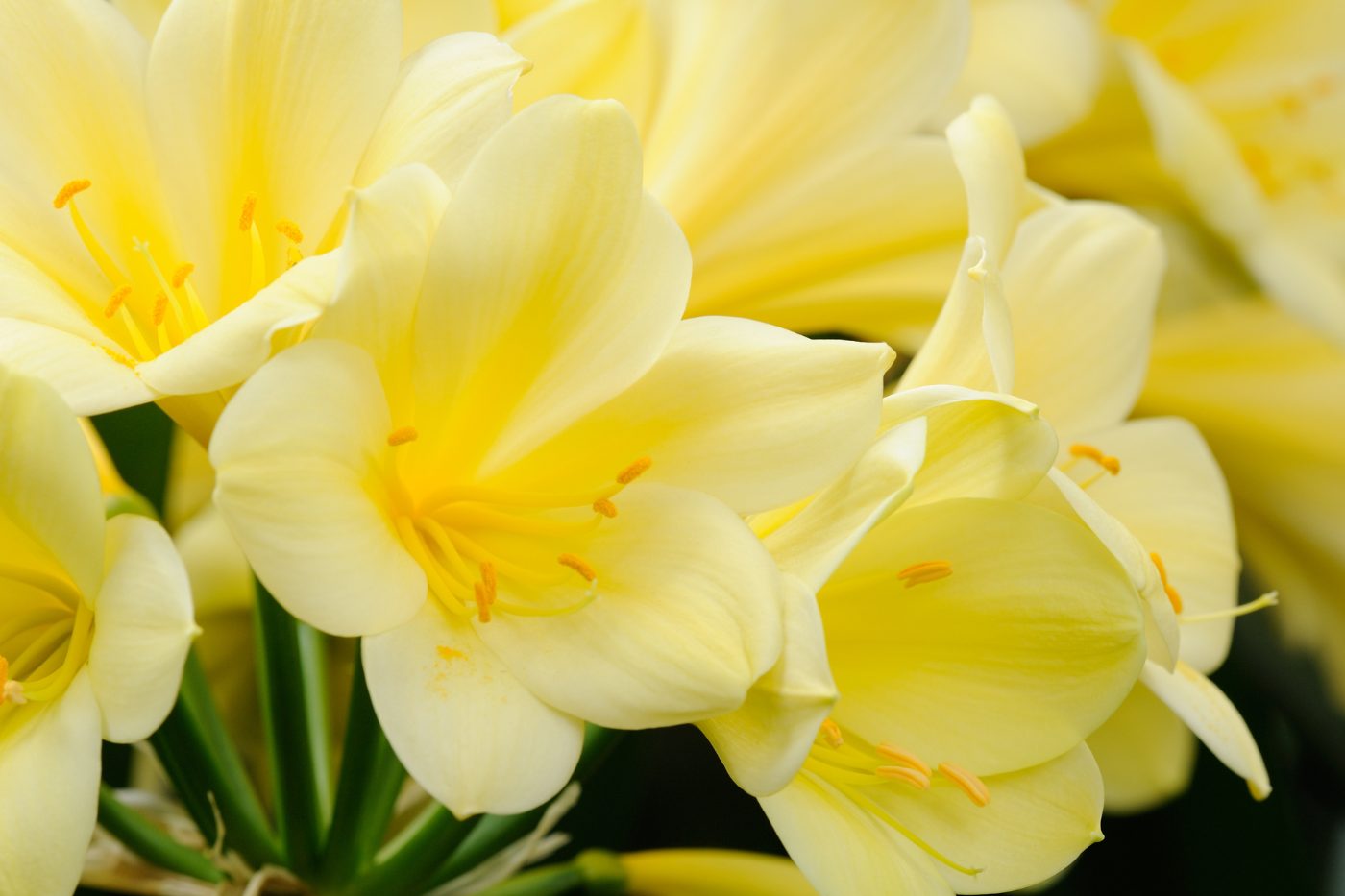
Everything new in Clivia begins with a berry. Every colour break, every named plant, every seedling on these benches started as a seed that somebody cleaned, sowed, and then waited on for years. Growing Clivia from seed is not difficult, but it rewards a particular temperament: the work is light, the intervals are long, and the prize at the end is a flower nobody has seen before. This is the whole journey, from ripe berry to first bloom, as it is practised here and as the Clivia Society sources describe it.
Ripeness: reading the berry
The Clivia fruit is a true berry, not a pod, and a single berry can hold anywhere from one to about fifteen seeds, depending on how many ovules were fertilised at pollination. It is in no hurry: a berry can take the better part of a year to ripen, and in the pendulous species ripening runs to roughly twelve to fifteen months. Harvest comes in autumn, about April to July in the southern hemisphere. The test is not colour but touch: take the berry when it gives slightly to gentle pressure, like judging a ripe peach, even if it is still green. Waiting for full colour is not essential, and berries left too long are harder to clean.
Cleaning: the step that decides the rest
Inside the berry, each seed sits wrapped in a thin membrane, under the pulp and the skin. All of it must come off: skin, pulp, and especially the membrane, because membrane left on the seed invites fungus, and fungus is the seed's real enemy. Wash the cleaned seed in soapy water, dry it on a clean towel, dust it lightly with a contact fungicide, and store it in a ventilated container.
Then sow soon. Clivia seed is recalcitrant: it has no hard coat, cannot be dried down and banked like ordinary seed, and loses viability as it dries out. Fresh seed germinates best, and the usual practice is to sow about two weeks after harvest. Some seeds are so ready that they have already begun to germinate inside the berry.
Sowing: medium, depth, and patience in a bag
Sow into a finer, seedling-grade composted pine bark, the same family of medium mature plants grow in, just sifted smaller. Depth is the easiest instruction in horticulture: there is none. Press the seed onto the surface of the moist medium; do not bury it. Seal the tray inside a plastic bag to hold the moisture, keep it warm, and open it as seldom as possible, so airborne spores do not settle on the seed. Two space-saving alternatives work on the same principle: seed laid between damp paper towel in a sealed zip-lock bag, or on moist silica sand in a sealed container kept warm.
Warmth, and what to watch for
Germinating seed wants steady, mild warmth: comfortably above about 18 degrees Celsius but not beyond about 26 or 27. Cooler, and the seed simply waits; warmer, and it tends to dry out rather than germinate. Inspect after about a month. The first sign of life is the radicle, the future root, pushing out from a point that often shows beforehand as a dark spot on the seed. It quickly grows a collar of fine root hairs, and that is the cue to act: move a germinated seed onto its seedbed or medium before those root hairs grip the paper and tear. Keep seedbeds shaded and moist, never soggy, because damping-off is the worst enemy of young seedlings and a clean, free-draining mix is the best defence.
The three-to-five-year wait
Now the intervals stretch out. At about twelve to eighteen months, when the first leaf is 5 to 10 cm, seedlings move to 15 cm pots. At seven to eight leaves they move on to 20 cm pots, and in a 20 cm pot a plant can flower. For Clivia miniata, the species behind most garden and show plants, first flower comes at about three to five years from seed, and some species make miniata look hasty: Clivia nobilis is slow from seed at six years or more. There is no shortcut worth taking. Good light, a lean balanced feed through the growing seasons, and an open medium move things along at the margin; nothing else does.
Why seedlings vary, and why that is the point
A division is its parent continued; a seedling is a genuine new individual. Every seed in a berry carries the same cross but shuffles it differently, and Clivia colour genetics guarantees surprises: a plant can carry a colour it does not show, so an orange mother can quietly hold yellow, and two yellows from different breeding groups can throw orange seedlings. Sow ten seeds from one berry and you may raise ten subtly different plants, in vigour, in leaf, and in the flower that finally opens. For a gardener this is charm; for a breeder it is the entire method. The cross states the question, and each seedling is one answer.
How the register records a lot
Because the answer arrives years after the question, the record has to outlast the wait. In this register every seed lot carries its own code and its cross, written the way Danie Pretorius has recorded his breeding since 2004: mother by father, the pod parent first, so A X B means A carried the berry and B gave the pollen, and a self is recorded as a self. When the seedlings from that lot are potted on, sold, or kept back for evaluation, the lot's cross goes with them. A seedling bought from a recorded lot is not an anonymous plant; it is a known cross, part-way through revealing itself.
Seed is the one thing here that is never simply on the shelf: lots follow the seasons and the berries, and the best crosses are few. If growing from seed appeals to you, leave your details and we will let you know when lots are listed. Then sow fresh, keep the fungus out, and settle in. The wait is long, and the first flower repays all of it.