Dividing Clivia offsets: when, how, and why patience pays
Daniel Pretorius · 5 min read · 30 August 2026
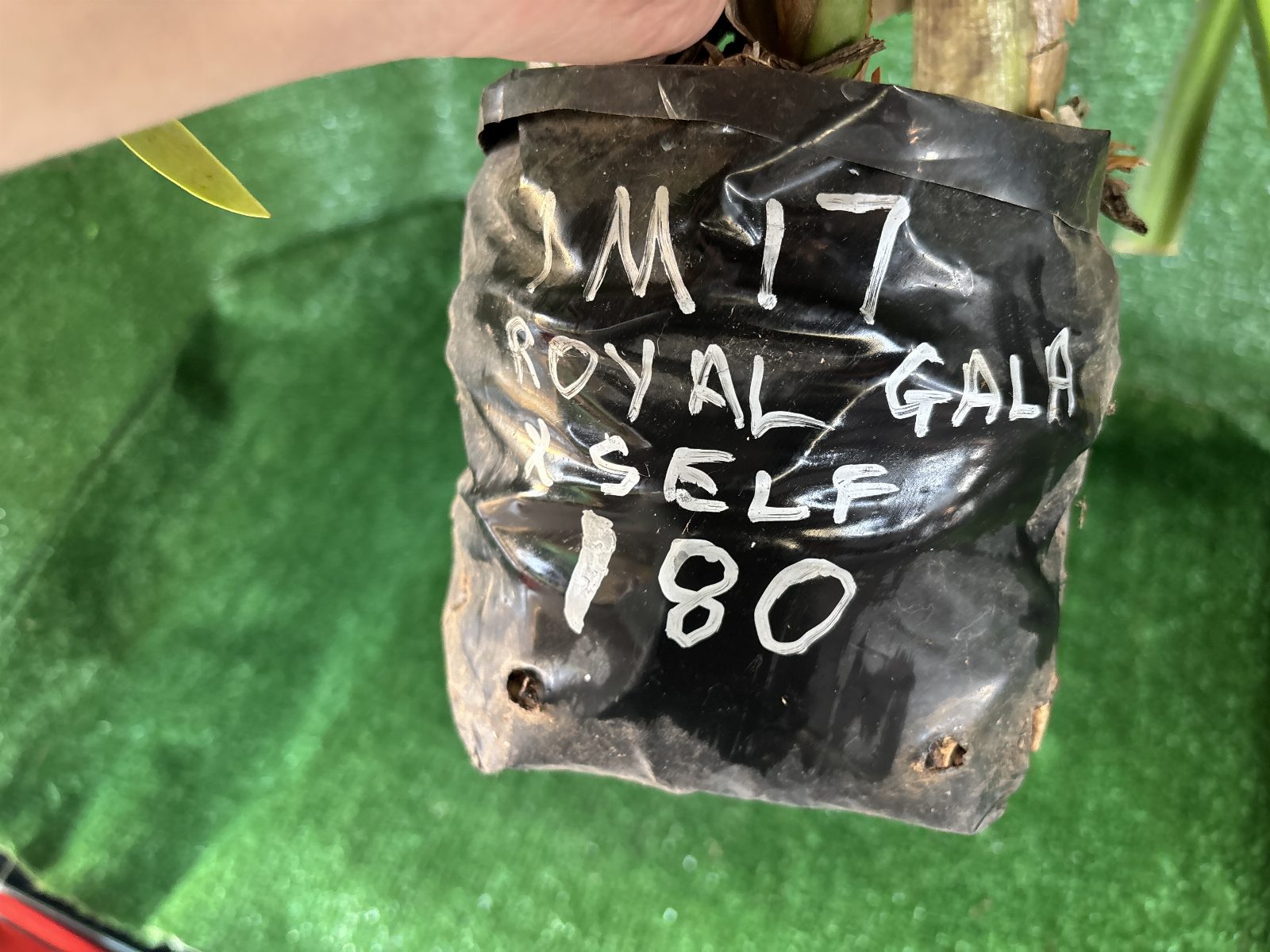
A Clivia left to itself becomes a clump. Around the base of an established plant, young plants appear: offsets, also called pups or suckers, each sharing the mother's root mass until a grower separates them. Division is the second of the two ways Clivia multiplies, and it is the opposite of the first. Seed gives variation, the raw material of breeding; an offset, cut free with its own roots, grows into an exact clone of the parent. Most of the craft is in knowing when to cut, and when to wait. The terms used below follow the Clivia Society terminology.
What an offset is
An offset is a young plant that grows from the base of an established parent, sharing its root mass until it is separated. It is not a seedling. It arises from the parent's own tissue, so it carries the parent's flower, leaf, and habit exactly. Offsets are also the quicker route to a flowering-size plant, because the tissue is already mature: a well-rooted division is years ahead of a seed sown the same day.
When it is big enough
This is where patience pays, twice over. First, an offset left attached to the mother grows faster than one cut early, because it is still drawing on the parent's established roots. The usual practice is to wait until the offset has about nine to ten leaves before removing it. Second, the offset must have adequate roots of its own. A pup cut free without them has to build a root system from nothing, in a medium it cannot yet drink from, and it sulks for a season or fails altogether. Wait for the leaves, check for the roots, and the division barely notices the move.
As for the season: Clivia can be divided at any time of year, but the best windows are just after the spring flowering ends, around the end of September, and again in cooler autumn, when fungal infection is less likely. In the warmer parts of the country, spring and summer divisions also establish quickly.
The tools
The list is short, and cleanliness matters more than any of it:
- A clean, sharp knife. Sterilise it between plants, by flaming it in methylated spirits or standing it in a sterilising solution, so disease is not carried from one plant to the next.
- A hose with a jet, to wash the medium off the roots of a dense clump so you can see what you are cutting.
- Flowers of sulphur or another fungicide, to dust every cut surface.
- A pot of the right size and a coarse, properly composted pine bark to pot into.
The cut
Lift the whole plant rather than digging blind at its base. If the clump is dense, wash the medium off the roots with the hose jet until you can trace each offset to its junction with the mother and see which roots belong to which plant. Choose only the offsets that already have adequate roots of their own, and cut each one free with the clean knife, taking its roots with it.
Then treat both patients, not one. Dust every cut surface, on the offset and on the mother, with flowers of sulphur or another fungicide, and let the cuts dry before repotting, even overnight. A fresh wet wound pressed into damp medium is an invitation to rot; a dry, callused one is not. This one unhurried step saves more divisions than any tonic applied afterwards.
Potting the division
Clivia are not soil plants. Their thick white roots are built for life in leaf litter, with air around them, and the South African standard medium is properly composted pine bark, coarse grade for mature plants, at a slightly acidic pH of about 5.5 to 6.5. A few drainage rules are worth repeating because they are so often got wrong:
- Keep the whole pot one medium. No gravel or polystyrene layer in the bottom "for drainage"; a layered pot traps a wet zone exactly where the new roots are trying to grow.
- Tall pots drain better than short ones, and pots standing on sand or capillary matting drain better than pots up on bricks.
- Keep the crown at or just above the surface, so water cannot pool in it.
Aftercare
A new division wants what every Clivia wants, only more gently. Bright shade, never midday sun. Water that follows the seasons: generous in the warm growing months, tapering away in late autumn, very little through the winter rest. In this collection we water a fresh division sparingly at first, letting the medium approach dryness between waterings while the cut heals and new roots take hold, then ease it onto the normal seasonal rhythm. Feed modestly once it is growing again, keeping nitrogen and potassium in balance, and stop feeding altogether over winter.
Why a division keeps the parent's name
Here is the quiet distinction that the whole register rests on. A division is the parent, continued: the same plant, in a second pot. A seedling is a new individual, the outcome of a cross, and even a deliberate cross between two fine parents throws variation, because colour genes hide and resurface across generations. This is also why a good variegate is increased by division rather than seed: most leaf variegation is chimeral, living in the layers of the growing plant rather than in the seed, and it usually does not come true from a berry.
The register records the two kinds of plant differently, as it should. A division inherits its parent's identity, name, and cross; a seedling is entered under the cross that made it, mother by father, and must earn its own description when it first flowers. So when an offset in the catalogue carries the name of a known plant, that is not marketing shorthand. It is the same plant, patiently waited for, cleanly cut, and honestly labelled.