
The Clivia colour classes, explained
Daniel Pretorius · 6 min read · 1 September 2026
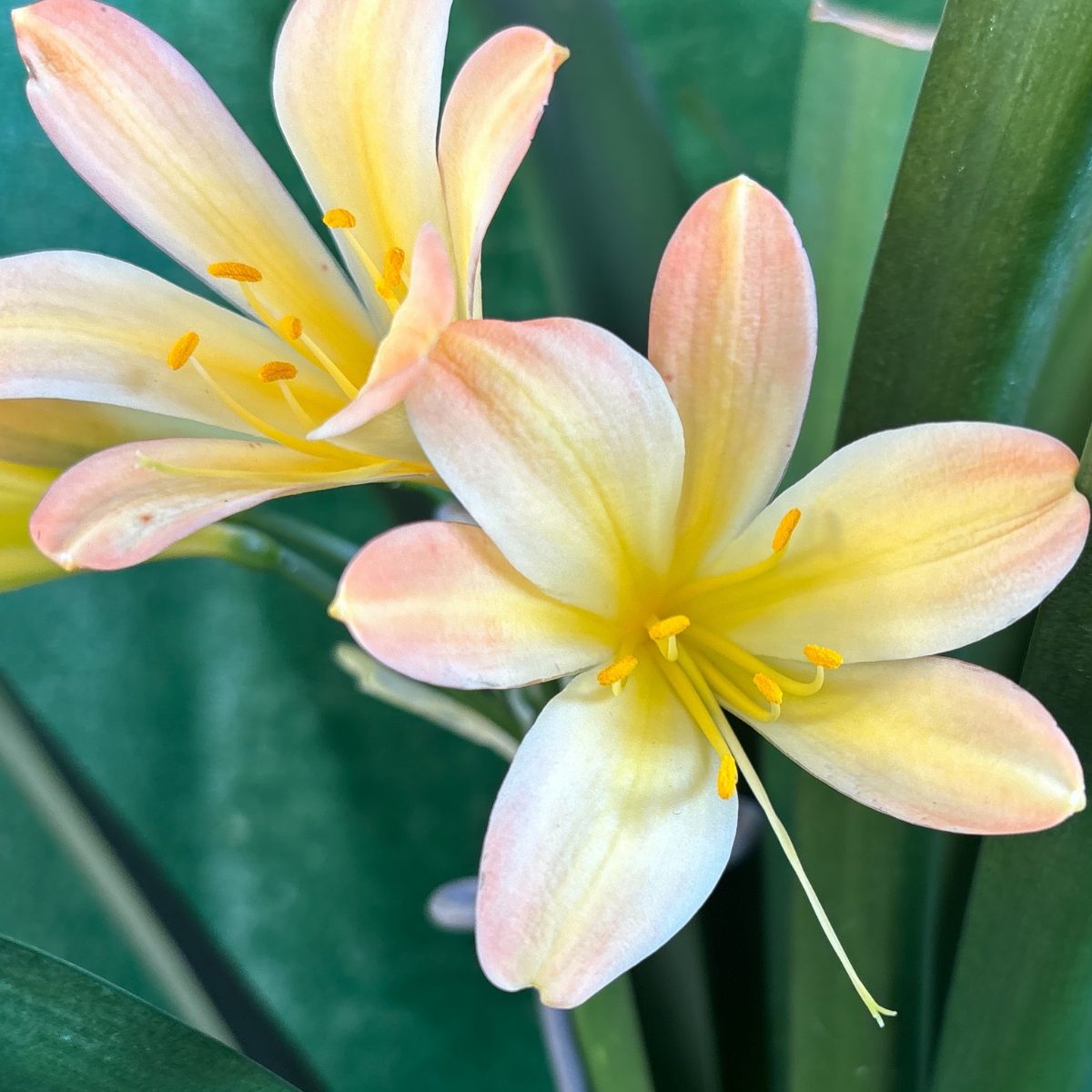
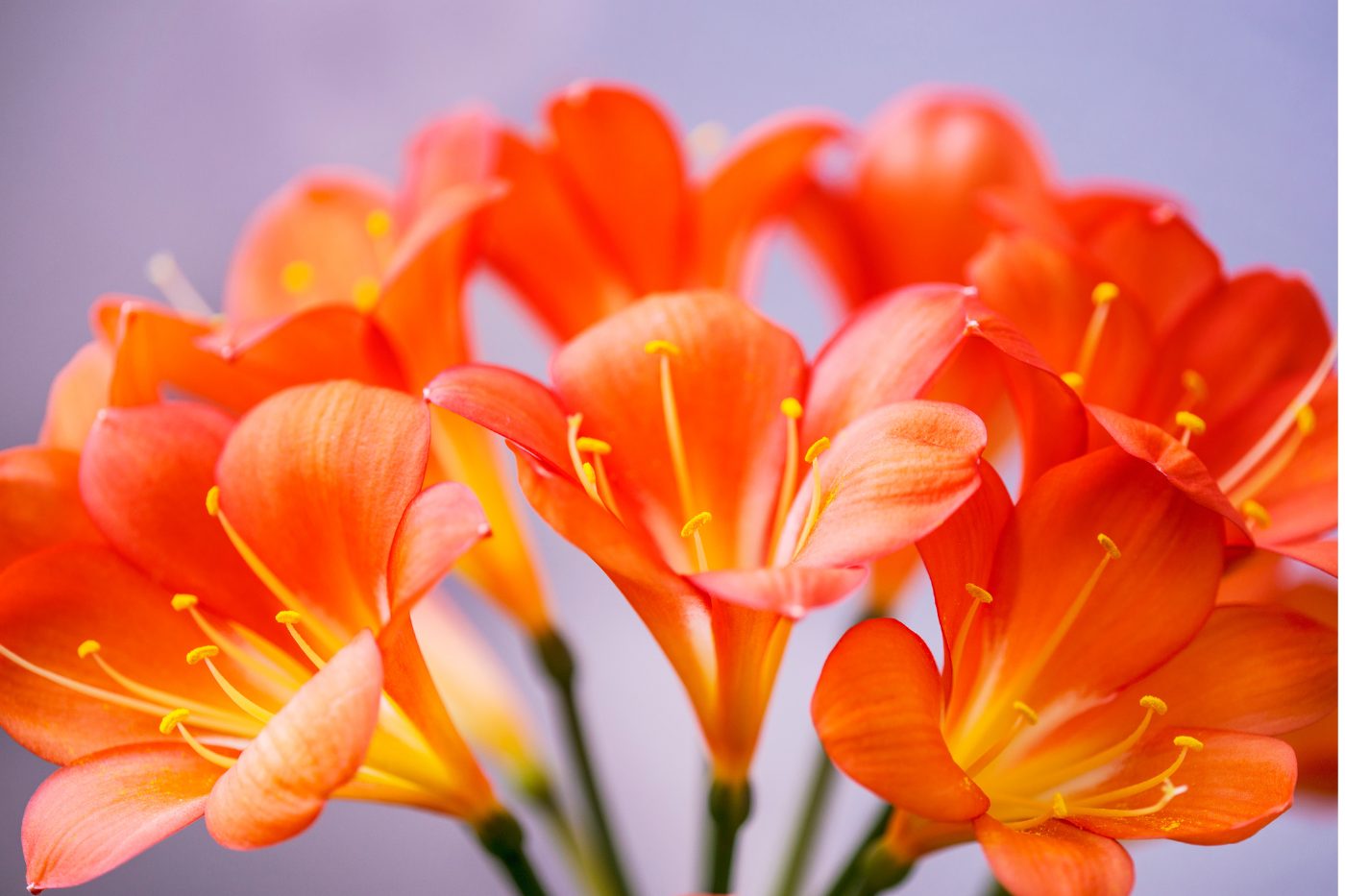
Ask what colour a Clivia is and you will get a plain answer: orange, or yellow, or something rarer. Ask a judge and you will get a classification. The Clivia Society colour system is the shared vocabulary of the South African show bench, and it is the vocabulary this catalogue uses, because Danie Pretorius chairs the Judges Committee of the Northern Clivia Club and keeps his register in the language he judges in. This is a walk through the classes, from Red to Green and out into the patterned flowers, and a note on why no plant here is classified before its flower opens.
How the system works
Two instruments sit behind every colour name. The first is the Clivia Society Colour Chart, a set of one hundred physical swatches numbered CC1 to CC100, each cross-referenced to a Royal Horticultural Society colour code. A grower holds the open flower against the chart and reads off the swatch it matches; Red, for instance, spans swatches CC1 to CC10. The second is the show class list, where the base colours run in pairs: one class for the flower without a green throat and its partner for the same colour with one, written Wgt, for "with green throat". Between the chart and the classes, a flower's colour stops being an opinion and becomes a record.
The base colours, Red through Green
Red and the oranges
- Red: deep true red C. miniata flowers, the darkest and most saturated reds in the range.
- Dark Orange: strong deep orange, sitting between red and mid orange.
- Orange: the classic bright mid orange most associated with C. miniata. This is the wild colour, and still the standard the others are measured against.
- Light Orange: a soft, paler orange, lighter than the standard orange.
The yellows
- Dark Yellow: rich, deep, golden yellow, the most saturated of the yellows.
- Yellow: clear mid yellow, the classic yellow clivia colour.
- Light Yellow: pale, soft yellow verging on cream.
Yellow deserves its own sentence, because it is the colour that made Clivia collecting what it is. A yellow flower is one that has lost its red pigment, a recessive condition that is rare in the wild, and there is more than one genetic route to it: cross two yellows from different breeding groups and the seedlings can come out orange. A good yellow is therefore never an accident. Somewhere behind it stand generations of deliberate crosses.
Pink, apricot, salmon and the peaches
- Pink: pink flowered clivias, from mid rose pink to pale blush pink.
- Apricot: warm soft orange-pink, lighter and pinker than orange, the classic apricot clivia.
- Salmon: muted pinkish orange-red, softer than red.
- Dark Peach: deep peach, the darkest and warmest of the peach group.
- Peach: warm mid peach, a soft yellow-orange with a pink cast.
- Light Peach: pale, delicate peach verging on cream.
These pastel classes sit close together on the chart, and telling a light peach from an apricot by eye across a show hall is exactly why the physical swatches exist.
Green and bronze
- Green: green flowered clivias, from deep leaf green to pale yellow-green, covering the last stretch of the chart at CC91 to CC100.
- Bronze: muted brownish orange, the bronze or brick tone, greyed relative to true orange.
The modifiers and the patterned classes
Beyond the base colours, the system describes how colour is arranged on the flower, and here the definitions get pleasingly exact. The six petal-like segments of a Clivia flower are tepals, in an inner and an outer whorl of three, and most of these classes are defined on them:
- Green Throat (Wgt): not a colour of its own but a modifier on any base colour. A significant green throat is required, and the deeper and more extensive the green, the better; an insignificant green throat is simply judged in the without-green-throat class, neither penalised nor advantaged.
- Bicolor: the throat colour extends beyond 50 percent and up to 90 percent of the tepal length. Under 50 percent is normal tepal colouring; above 90 percent it becomes a picotee.
- Picotee: throat colour covers 90 percent or more, but not all, of the tepal, leaving a narrow rim of a second colour as a continuous ring around the flower's edge. A white ring has its own name: a Geneva Edge.
- Two-Tone: the inner and outer whorls are different colours.
- Bitonal: the inner and outer whorls are different shades of the same colour.
- Splashed: a brushing of a second colour on the inner tepal surface, with non-distinct coloration at the tips.
- Ghost (Water Colour): a dilution or loss of colour on the inner tepal surfaces, faded blotches with soft edges that merge into the darker tepal.
- Versi-Colour: the back of the tepal is a different colour from its inner face.
- Appleblossom: blush flowers, an infusion of orange or red on white or yellow tepals, named for a very pale wild miniata line collected for Kirstenbosch.
- Any Other Colour: the honest catch-all, for flowers unlikely to become a class of their own, judged on their own aesthetic merit.
Why classification waits for the open flower
A swatch chart can only be read against an open flower, and there is a deeper reason to wait than that. Clivia colour genes hide: an orange plant can carry yellow without showing it, and a promising cross can throw seedlings across several classes. So a seedling's ancestry suggests what it might be, but only the first open flower says what it is. In this register a seedling is recorded under its cross and left unclassified until it blooms; only then is the flower read, the class entered, and the plant described as itself rather than as its parents' promise. A plant sold in bud is sold on its cross. A plant sold classified has already shown its flower.
How the catalogue filter maps to the classes
The colour filter in the catalogue is not a marketing palette. Its options are these classes, drawn from the same vocabulary described above, and a plant appears under Yellow or Peach or Bicolor because that is the class recorded against it in the register at flowering. Filter for Yellow and you are searching the register the way a judge would read a show schedule. It is a small thing, but it is the difference between a shop that sells orange flowers and one that can tell you, precisely, which orange.